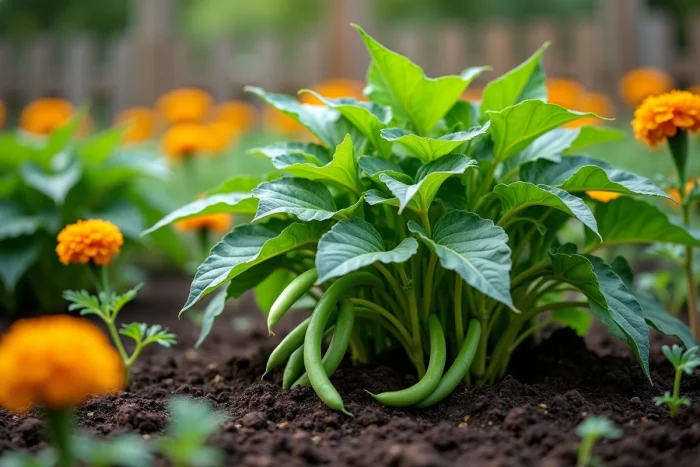
In the vegetable garden, green beans do not just produce tender pods. Their roots host bacteria capable of capturing nitrogen from the air and returning it to the soil. This mechanism, called symbiotic fixation, makes them a valuable neighbor for many vegetables. However, it is essential to choose the right partners and avoid those that will hinder the harvest.
Nitrogen fixation by green beans: the invisible engine of companion planting
Before making lists of compatible vegetables, it is worth understanding why the bean alters the soil around it. Nodules, small growths on the roots, house bacteria of the genus Rhizobium. These bacteria transform atmospheric nitrogen into nitrogen that can be assimilated by neighboring plants.
Research from INRAE on legumes in market gardening systems confirms that this symbiosis allows for a significant reduction in mineral nitrogen inputs without loss of yield. Crop residues, once the plants are pulled up, continue to enrich the soil for the following season.
In practice, this means that nitrogen-hungry vegetables (tomatoes, squash, cabbage) benefit directly from the proximity of beans. Successfully associating green beans in the vegetable garden primarily relies on this logic of nutritional exchange in the soil.
Green beans and tomatoes: a duo that works row by row
Have you ever noticed that tomatoes sometimes yellow in mid-season despite regular watering? The problem often stems from a lack of nitrogen in the soil. Planting green beans between the rows of tomatoes naturally corrects this imbalance.
The tomato, which is very nutrient-demanding, takes advantage of the nitrogen fixed by the bean. In return, the dense foliage of the tomatoes provides light shading that protects dwarf beans from heat stress in the height of summer.
Concrete implementation
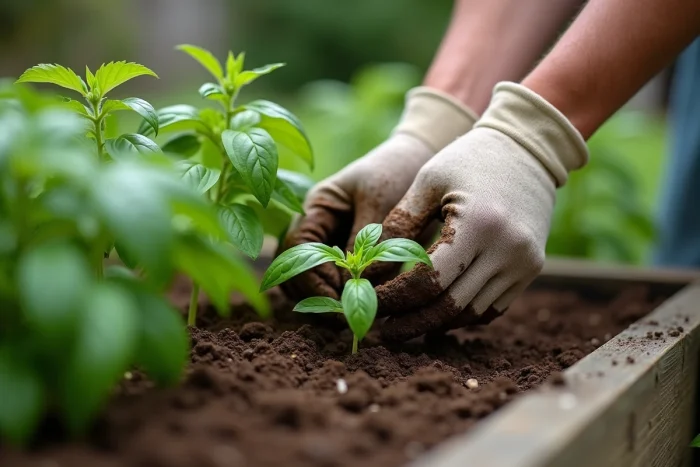
Sow the green beans two to three weeks after transplanting the tomatoes, when they are well-rooted. Maintain a spacing of at least 40 cm between the tomato rows and the bean lines so that each plant has access to light. Dwarf beans are better suited than climbing ones in this configuration, as they do not compete with the tomatoes for height.
Squash, corn, and beans: the “three sisters” trio adapted to the French vegetable garden
This association, inherited from Native American cultures, relies on physical and nutritional complementarity between three plants. Corn serves as a natural support for climbing beans. The bean fixes nitrogen for the corn, which is a heavy consumer. The squash covers the soil with its large leaves, limiting evaporation and slowing the growth of weeds.
Why adapt this trio to the French vegetable garden? Because local varieties of squash (butternut, potimarron) and sweet corn are well-suited to this cultivation. The soil must be rich and well-drained for the three plants to coexist without water competition.
- Sow the corn first, when the soil reaches a stable temperature above 12 °C. Wait until it is about twenty centimeters tall before sowing the climbing beans at its base.
- Plant the squashes about 1 m from the corn plants so that their stems have room to spread without smothering the beans.
- Water at the base rather than by spraying: the dense foliage of the squash retains moisture, but excess water on the leaves of the bean promotes fungal diseases.
Lettuce, cucumber, and strawberry: discreet but effective neighbors
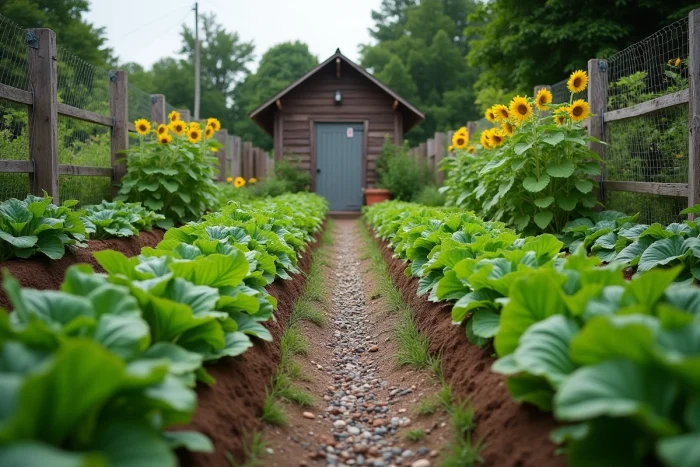
Not all companions of the bean are large, nutrient-hungry vegetables. Lettuce, for example, easily fits between rows of dwarf beans. Its short cycle allows it to be harvested before the beans take up all the space. Lettuce protects the soil from drying out during the first weeks of growth.
The cucumber shares the same water needs as the green bean, and the two plants do not compete for the same nutrients. The cucumber primarily draws potassium, while the bean mobilizes few resources in the soil thanks to its nitrogen fixation.
The strawberry, often overlooked in companion planting guides, benefits significantly from the proximity of beans. The nitrogen released into the soil stimulates the vegetative growth of strawberries, improving fruiting in the following season.
Alliums and green beans: an incompatibility to nuance
Most guides advise against planting garlic, onion, or leek next to beans. The reason given: alliums produce sulfur compounds that inhibit nitrogen fixation by Rhizobium.
Tests conducted in Brittany in diversified market gardening provide a different perspective. The presence of garlic or onion at the edges of the beds reduces the spread of foliar disease outbreaks on the beans. The repellent effect of alliums on certain pests partially compensates for their negative impact on nodulation.
The key is distance. Separate alliums and beans by at least 1.5 m to limit root inhibition while benefiting from the health effect at the edge of the plot. Avoid alternating rows, which concentrate sulfur compounds in the root zone of the beans.
Other neighbors to avoid
- Fennel secretes allelopathic substances that hinder the germination of many species, including beans. Isolate it in a corner of the vegetable garden.
- Cabbages, although they benefit from the nitrogen from the bean, attract the cabbage moth, whose caterpillars can migrate to neighboring plants. Plan for an insect net if you attempt this association.
- Potatoes compete for root space with dwarf beans. Reserve this combination for pole beans, whose roots explore a different area of the soil.
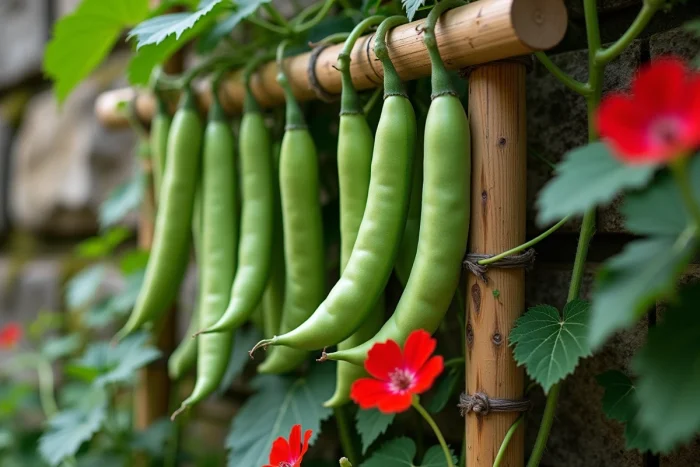
Flower strips near beans: a lever against aphids
Since 2021, ITAB has recommended the establishment of flower strips (phacelia, borage, marigold, dill) near rows of legumes. These flowers attract hoverflies and parasitoids that naturally regulate aphid and whitefly populations on the beans.
Two to three linear meters of flowers are sufficient for a ten-meter row of beans. Sow the flower strips at the same time as the beans so that the auxiliaries are present as soon as the first pests appear. This setup reduces the need for biocontrol products, even in organic market gardening.
Associating green beans in the vegetable garden is not just about a list of good and bad neighbors. The distance between rows, the sowing schedule, and the presence of auxiliary flowers weigh as heavily as the choice of companion species. A well-thought-out vegetable garden in terms of companion planting produces more on the same area, with fewer inputs.