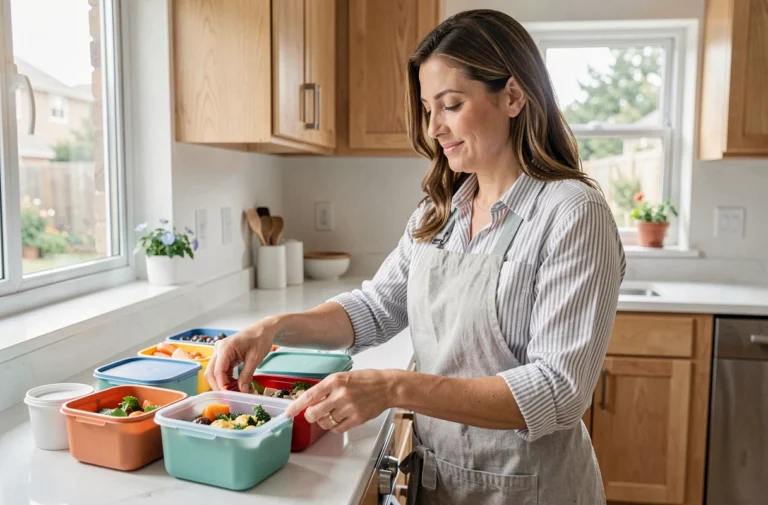
A tenant moving into a poorly ventilated home or one without a functional power outlet in the kitchen will only remember one thing: discomfort. Before thinking about decoration or storage, the fundamentals that condition daily life must be addressed. The essential features of a comfortable home are not limited to a list of furniture: they include thermal regulation, electrical safety, and increasingly, adaptation to the actual uses of the occupants.
Ventilation and thermal regulation: the invisible comfort of a home
Ventilation is rarely considered when equipping an apartment. Yet, it is the primary factor that degrades comfort if neglected. A clogged or absent mechanical ventilation system causes condensation on windows, mold in the bathroom, and a feeling of stale air in winter.
Since the strengthening of energy performance requirements, the most energy-consuming homes can no longer be rented out. This means that a landlord must ensure that insulation, ventilation, and the heating system work together. An efficient radiator in a poorly insulated room consumes energy without heating.
For a functional home, it is recommended to have at least a programmable thermostat on the heating circuit, clean extraction vents in humid rooms, and window seals in good condition. These features do not appear on any “decor” list, but they determine whether one sleeps well at night and whether the bill remains reasonable.
These detailed technical criteria can also be found on the equipment page on Capitaine Immo, which clearly distinguishes between what is mandatory and what is recommended for each room.
Kitchen and bathroom: the equipment that shapes daily life
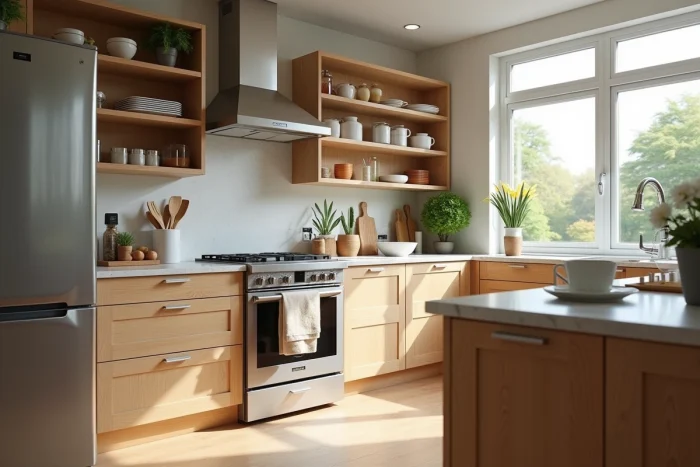
The kitchen concentrates the majority of frustrations in a poorly equipped home. We are not talking about a stand mixer, but about cooktops, an oven or microwave, and a refrigerator with a freezer compartment. Without these three elements, preparing a meal becomes a chore.
Dishes and basic utensils also count. A furnished apartment offering two plates and a butter knife for four people generates immediate negative reviews in seasonal rentals. The operational minimum for a functional kitchen includes:
- A set of pots and a pan suitable for the installed cooktops (induction or gas, compatibility is often overlooked)
- Sufficient dishware for the number of sleeping arrangements, with complete cutlery and matching glasses
- A clear work surface with at least two accessible power outlets for plugging in a kettle or toaster
- A trash can with a lid and, in relevant municipalities, a selective sorting system
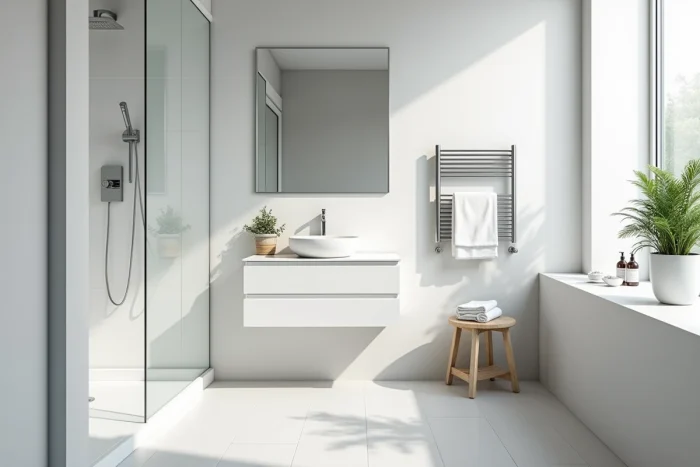
In the bathroom, the critical point remains the shower or bathtub with reliable hot water supply. An undersized water heater that only provides ten minutes of hot water turns every morning into a source of stress. One should also check for the presence of a mirror, a towel rack, and sufficient lighting above the sink.
Accessibility features: a strategic investment
Most equipment lists completely ignore accessibility. The law of February 9, 2024, regarding the adaptation of society to aging, reinforces the consideration of aging in the French housing stock.
In practical terms, a few targeted additions increase comfort for all occupants, not just the elderly:
- Support bars in the bathroom, fixed to the wall (not suction-mounted), near the shower and toilet
- Enhanced lighting in hallways, corridors, and stairs, with switches accessible without effort
- Ergonomic lever door handles, easier to manipulate than a round handle for anyone carrying a shopping bag
- A walk-in shower rather than a high bathtub, which also facilitates maintenance
The National Housing Agency (Anah), through its “Habiter facile” program, specifically subsidizes these adaptation features. Anticipating accessibility broadens the target audience of the housing and reduces the risk of costly renovations imposed later.
Connectivity and lighting: two underestimated aspects in housing equipment
A home without a proper Internet connection loses attractiveness, whether for long-term furnished rentals or seasonal stays. Fiber optic, when available, becomes a selection criterion on par with size or exposure.
If fiber connection is not yet effective, at a minimum, a recent Wi-Fi router capable of covering the entire space should be installed. Feedback varies on this point depending on the configuration of load-bearing walls, but a Wi-Fi repeater in homes with more than two rooms avoids dead zones.
Lighting is one of those features that everyone notices when it is poor and no one mentions when it is good. At a minimum, a functional light fixture should be planned for each room, with warm temperature bulbs in resting areas and a more neutral light in the kitchen and bathroom.
Switched outlets are a real plus in living spaces. They allow one to turn on a floor lamp upon entering without fumbling around.
The detail that changes the daily experience
The power strip is often underestimated. A home with two outlets per bedroom and none near the kitchen work surface forces occupants to juggle with extension cords. Planning for a sufficient number of outlets in each room avoids this constant makeshift solution and reduces electrical risks associated with daisy-chaining.
Equipping a home comfortably and functionally means addressing thermal regulation, hot water, the kitchen, accessibility, and connectivity in that order. Furniture comes afterward, once these fundamentals are settled. An elegant sofa in a poorly ventilated and poorly lit apartment does not fool anyone for very long.