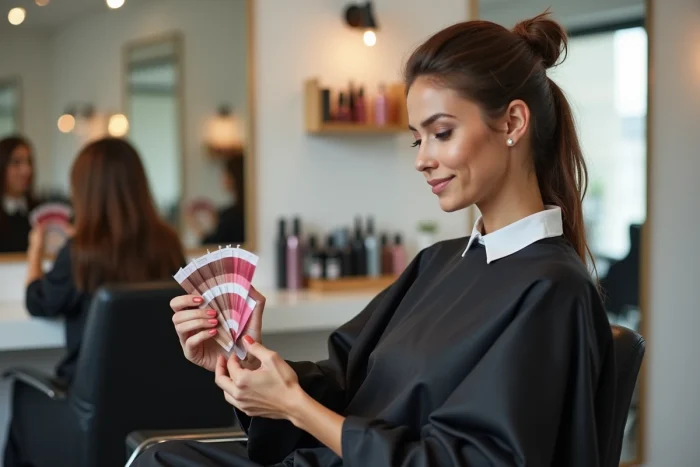
We’ve all seen that moment in the salon: the client shows an Instagram photo, the colorist applies the shade, and the result looks nothing like the image. The reason rarely lies in a technical error. It’s almost always a compatibility issue between the chosen color and what the face, skin, and ambient light actually reflect. We need to think differently than just relying on a trend or a filter.
Hair Color and Screen Appearance: An Underestimated Trap
Since the rise of video conferencing and social media, colorists have noticed a recurring discrepancy: the color perceived on screen differs from the result in natural light. The LED light of a selfie ring, a phone’s white balance, or automatic filters on TikTok and Reels alter the perception of shades.
In practice, a golden blonde can appear as a cool platinum on a poorly calibrated camera. A warm chocolate brown will look dull under office neon lights. Specialized colorists now slightly adjust shades so that the result works both in real life and on camera.
If you work a lot on video calls or regularly post video content, mention it to your hairstylist. This factor can guide the choice towards more saturated or softer highlights depending on your daily lighting. To choose the right hair color, this type of detail makes all the difference.
Skin Undertone and Eye Color: A Practical Test to Do at Home
Colorimetry by seasons (spring, summer, autumn, winter) is everywhere on blogs, but it is often oversimplified to the point of being useless. What really matters is identifying your skin undertone, not just whether it is light or dark.
A Quick Test with a White Towel
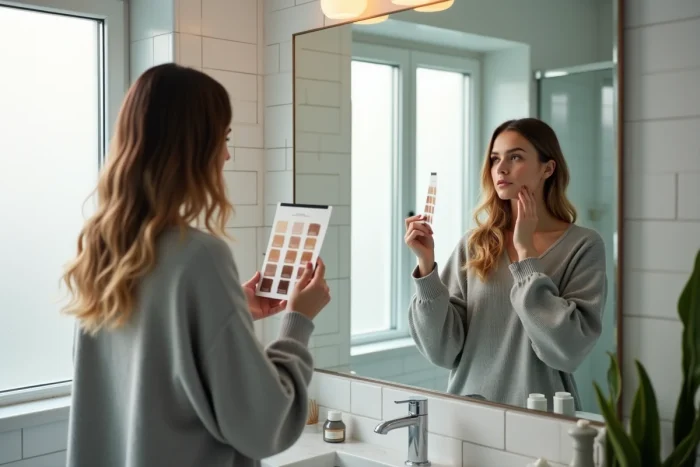
Brush your hair back and drape a white towel over your shoulders. Look at yourself in natural light (not under a ceiling light). If your skin leans towards yellow or gold, your undertone is warm. If it leans towards pink or blue, it is cool.
- Warm undertone: golden, coppery shades, honey brown, and amber red will harmonize the complexion instead of dulling it
- Cool undertone: ashy tones, platinum blonde, icy brown, or chestnut with violet highlights create a flattering contrast
- Neutral undertone (neither distinctly yellow nor distinctly pink): you have more latitude, but overly saturated shades in one direction may unbalance the face
The color of your eyes also plays a role. Hazel or green eyes stand out more with warm highlights. Blue or gray eyes gain intensity with cool or ashy tones. Reactions vary according to the depth of the gaze and skin tone, so the mirror test remains the most reliable.
Low Maintenance Coloring: Choosing a Shade That Ages Well
In recent years, the demand for so-called “low maintenance” hair colors has significantly increased in salons. The principle: choose a color that remains flattering even with several centimeters of regrowth, without needing a touch-up every four weeks.
Techniques like root-blended balayage, “expensive brunette,” or “expensive blonde” meet this need. The natural root is integrated into the color design, not masked. The result: the regrowth/color line is almost invisible for several months.
Three Criteria for a Long-Lasting Color
- Stay within a two-tone difference from your natural color: an ashy blonde on a dark brown base creates a harsh demarcation line by the third week
- Favor highlights rather than an all-over uniform color: multidimensional strands visually absorb regrowth
- Discuss the touch-up schedule with your stylist before finalizing the shade: a stunning color that requires a salon visit every month ends up being costly and damaging to the hair

Color Formulation: What Labels Don’t Clearly State
Market trends show a clear increase in short-formulated hair colors, ammonia-free, PPD-free, resorcinol-free, or fragrance-free. This demand is driven by consumers who are mindful of endocrine disruptors, especially during pregnancy or breastfeeding.
In the salon, the difference between a classic permanent color and a so-called “clean” color goes beyond the ingredient list. An ammonia-free color often covers gray hair less effectively and lasts less long on very dark bases. There is a compromise: you just need to know it before choosing.
On products sold in supermarkets, the number printed on the box (for example, 6.3 or 7.1) follows a precise coding system. The first digit indicates the tone level (1 being black, 10 being very light blonde). The number after the point indicates the main reflection (golden, ashy, coppery, mahogany). Understanding this code avoids unpleasant surprises when coloring at home.
Hair Color and Face Shape: A Final Filter Not to Overlook
There is a lot of talk about complexion and undertone, but less about face shape. A uniform and dark color on a round face accentuates the roundness. Lighter strands around the face create a framing effect that visually slims the features.
Conversely, an elongated face benefits from avoiding very dark roots with very light tips, which stretch the silhouette. Evenly distributed highlights rebalance proportions without altering the cut.
Choosing a hair color that truly enhances you is not just about following a seasonal palette or a trend seen online. It is a balancing act between your skin undertone, your lifestyle, the light in which you are most often seen, and the level of maintenance you are willing to undertake. A good colorist will ask these questions even before pulling out a color chart.