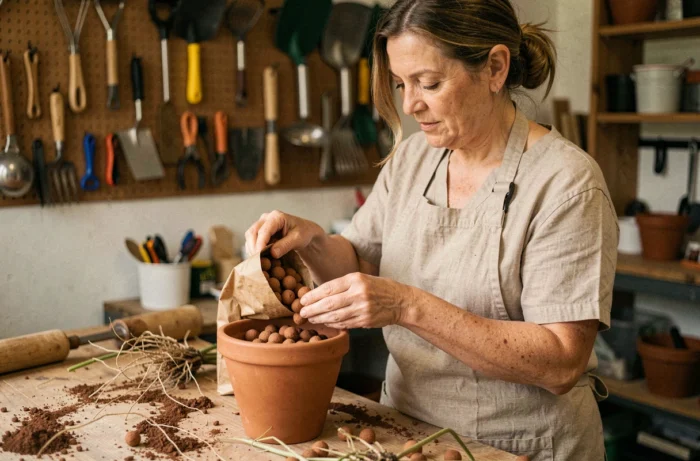
After repotting or at the end of the season, clay pebbles accumulate at the bottom of pots. They seem inert, almost everlasting. Yet their composition—clay fired at high temperatures—makes them a special kind of waste: neither organic nor recyclable in the conventional sense. Knowing what to do with them helps you avoid costly mistakes that can damage your plumbing or garden.
Dirty clay pebbles: clean and reuse them instead of throwing them away
Before looking for a bin, ask yourself: have these pebbles really reached the end of their useful life? In most cases, they haven’t. Expanded clay retains its porous structure for years, even after several growing cycles.
The visible problem is the layer of potting soil stuck to them, the whitish mineral salt deposits, and the tangled roots. This coating makes the pebbles look ruined. In reality, it’s fairly easy to remove.
How to clean dirty clay pebbles
Pour the pebbles into a bucket or basin. Remove the largest pieces of roots and potting soil by hand. Fill it with warm water and leave the pebbles to soak for one to two hours. The soil residue will come loose and settle at the bottom.
For visible mineral salt deposits on the surface, add a splash of white vinegar to the soaking water. The acid dissolves the salts. Then rinse with clean water, drain on a cloth or rack, and leave to dry in the sun.
If you’re wondering where to put cleaned clay pebbles, they can go back to their usual uses: as a drainage layer at the bottom of a pot, mineral mulch on the surface, or mixed into an overly compact growing medium.
- Pebbles covered in potting soil: soak in warm water, brush lightly, and rinse. Ready to reuse for drainage or in a growing medium.
- Pebbles whitened by salt deposits: soak for an hour in water with a little white vinegar, then rinse thoroughly with clean water.
- Pebbles tangled with roots: remove the roots by hand, soak for longer if needed, and sort out any cracked or crumbling pebbles.
The only pebbles you need to discard are those that crumble between your fingers. As long as a pebble remains firm and porous, it will still provide drainage.
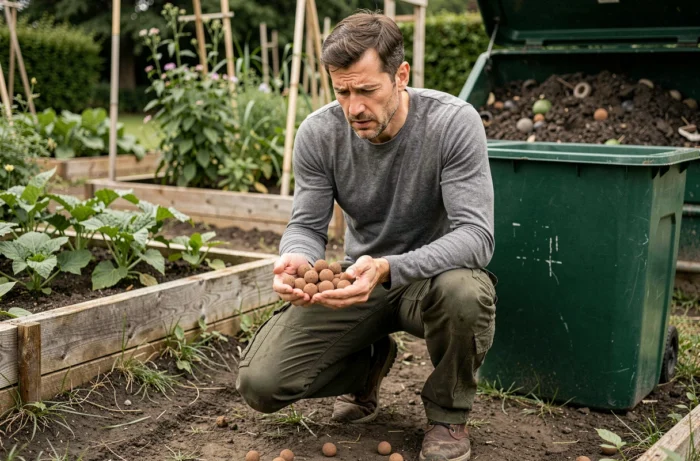
Disposing of clay pebbles: why neither the bin nor the sink is suitable
Expanded clay is a mineral material, not organic waste. This distinction makes all the difference when sorting waste.
Clay pebbles don’t break down or compost, and they don’t belong in a food waste bin or a home compost bin.
Some local authorities allow small quantities in household waste, but this isn’t an ideal solution. The pebbles make the bags heavier and end up in landfill, even though they could be reused.
Drains and pipes: a real risk of blockages
Pouring clay pebbles into a sink, toilet, or drain is a common mistake. They collect in pipe bends and block traps. Never pour clay pebbles down a drain. Water won’t dissolve them, and you’ll have to call a plumber.
Clay pebbles and recycling centres: check before you go
The obvious thing to do is take used pebbles to a recycling centre and put them in the rubble skip. On paper, expanded clay looks like ceramic or crushed brick. In practice, acceptance rules vary from one local authority to another.
Acceptance rules depend on the individual site. If your pebbles are mixed with potting soil, they may be refused.
How to take your clay pebbles to a recycling centre
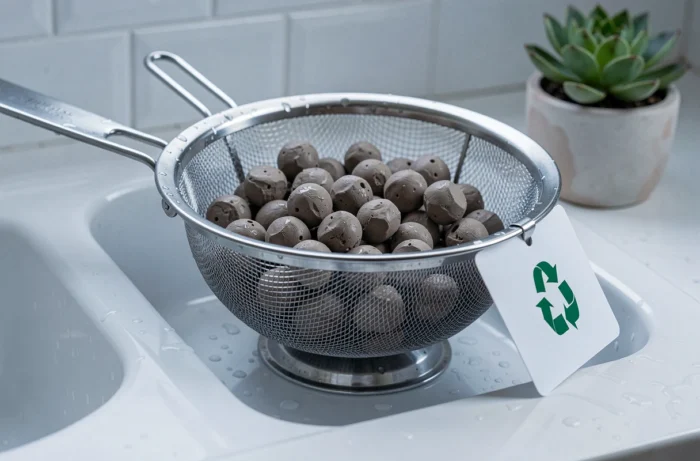
Separate the pebbles from the potting soil before you set off. A simple sift using a kitchen colander or garden sieve is all it takes. Describe them as expanded clay pebbles from gardening, separate from topsoil.
Call your recycling centre or check your local authority’s website. Ask whether they accept them as rubble or inert waste. It takes two minutes to check and saves you an unnecessary trip.
Reuse in the garden: give used clay pebbles a second life
Instead of looking for a disposal option, put the pebbles to use in your outdoor spaces. Their porous structure remains an asset even after years of use in pots.
- Drainage for clay-heavy flower beds: add a layer of pebbles to the bottom of a planting hole in heavy soil. They help water drain away from the roots.
- Mineral mulch for planters: spread them over the surface to limit evaporation and reduce weed growth. Unlike organic mulch, they don’t break down.
- Lightening heavy growing media: mix them into compact garden soil to aerate it and make it easier for roots to grow.
- Base layer for a raised planter: in a vegetable bed or raised planter, a layer of pebbles beneath the landscape fabric provides effective drainage without adding too much weight.
If you have more than you need, offer them on a local giveaway site or to a community garden. Clean clay pebbles are easy to pass on to gardeners who use hydroponics or repot their plants regularly.
The simplest approach is often the most effective: rinse, dry, and reuse rather than throw them away. Clay pebbles hardly wear out. They last far longer than the plants they support, which is exactly why they rarely need to be discarded.